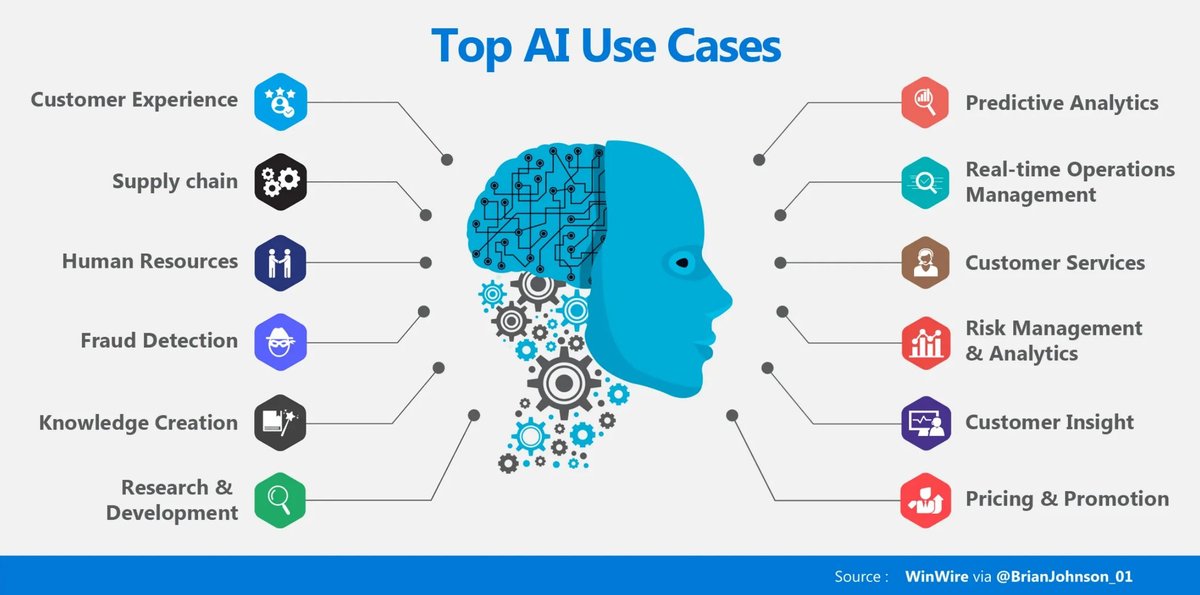
In the dynamic landscape of modern business, understanding and defining ideal use cases & applications isn't just a technical exercise—it's a strategic imperative. These frameworks serve as the bedrock for innovation, guiding product development, optimizing operations, and ultimately, delivering tangible value to customers. They move an organization beyond abstract ideas, grounding every effort in practical, user-centric interactions that drive success.
At a Glance: Key Takeaways
- Strategic Foundation: Use cases clarify how users interact with products or systems, forming the blueprint for design and development.
- Prevent Scope Creep: By detailing specific scenarios, use cases help define project boundaries and prevent unnecessary feature additions.
- Uncover Value & Problems: They highlight optimal outcomes and proactively identify potential issues or alternative paths, saving time and resources.
- Bridge the Gap: Use cases translate complex technical requirements into understandable scenarios for all stakeholders, fostering alignment.
- AI's Power Play: Artificial Intelligence thrives on well-defined use cases, unlocking transformative capabilities across virtually every business function and industry.
- Actionable Insights: From improving customer service with chatbots to optimizing supply chains with predictive analytics, use cases are the key to harnessing AI's potential.
The Foundational Blueprint: What Are Use Cases, Really?
At its core, a "use case" describes how a user—or "actor"—interacts with a system or product to achieve a specific goal. Think of it as a narrative that illustrates a particular scenario, detailing the steps taken, the responses received, and the ultimate outcome. It's a powerful tool for defining functional requirements, making sure that what you build actually solves a real problem for a real user.
Imagine you're developing a new online banking platform. A use case might describe how a customer "Transfers Funds Between Accounts." This isn't just about coding a transfer button; it's about understanding the customer's goal, the steps they'll take (logging in, selecting accounts, entering amount, confirming), and what happens if something goes wrong (insufficient funds, incorrect account details).
These scenarios are crucial for improving the planning stages of any project. They help teams:
- Gather clear requirements: By focusing on user interactions, you uncover exactly what the system needs to do.
- Define scope: Each use case has a clear goal, helping to set boundaries and prevent feature bloat.
- Create realistic roadmaps: Understanding the core interactions allows for more accurate estimations of effort and resources.
- Identify optimal outcomes: What does success look like from the user's perspective?
- Flag potential problems: By considering "alternative scenarios" or error paths, you can design more robust and user-friendly systems.
To start drafting a use case, ask three simple, yet profound, questions:
- Who is going to use the product? (The Actor)
- What will it be used for? (The Goal)
- How are they going to use it? (The Flow of Events)
Deconstructing a Use Case: Essential Components
While formats can vary, a robust use case typically includes several key elements that provide clarity and comprehensive detail:
- Use Case Number: A simple identifier for easy referencing and organization.
- Use Case Name: A concise, action-oriented phrase (e.g., "Place Order," "Register New User").
- Description: A brief summary of the use case's purpose and scope.
- Goal: The ultimate outcome the primary actor wishes to achieve through this interaction. This helps prevent scope creep by keeping the focus on the desired result.
- Actor: The person, system, or external entity that performs actions within the use case. An actor initiates the process. For example, a "Buyer," a "Customer Service Representative," or even a "Credit Card Processing System."
- Primary Actor: The actor whose goals are primarily fulfilled by the system during this use case. There is usually only one primary actor per use case.
- Stakeholders: Any individuals or groups who have an interest in the system's functionality and success, even if they don't directly interact with it in this specific use case (e.g., product owners, legal department, marketing team).
- Pre-conditions: The conditions that must be true before the use case can begin. For instance, for "Place Order," a pre-condition might be "User is logged in" or "Product is in stock."
- Triggers: The specific event or action that initiates the use case. This could be a user clicking a button, a system notification, or a scheduled event.
- Post-conditions: The possible states of the system after the use case successfully or unsuccessfully concludes. This clarifies what changes occurred (e.g., "Order is placed," "Funds are transferred," "Error message displayed").
- Basic Flow (Main Success Scenario): The ideal, intended path—the "happy path"—where everything goes perfectly, and the primary actor achieves their goal without any exceptions or errors. This is the core sequence of interactions.
- Alternative Paths (or Flows): These describe variations of the basic flow, detailing what happens during errors, exceptions, or less common but still valid scenarios. For example, what if a user enters invalid data? Or cancels the action midway?
Crafting Effective Use Cases: A Practical Guide
Let's look at how these components come together with concrete examples:
Example 1: Educational Technology - Quiz Feature
Use Case Name: Take Quiz and View Instant Feedback
Goal: Student successfully takes a quiz and receives immediate results.
Primary Actor: Student
Basic Flow (Main Success Scenario):
- Student logs into the learning platform.
- Student navigates to the "Quizzes" section.
- Student selects an available quiz.
- Student answers each quiz question.
- Student submits the quiz.
- System processes answers and displays score.
- System provides instant feedback on correct/incorrect answers.
- Student views their results and feedback.
Alternative Path: View Previous Quiz Results - Student logs into the learning platform.
- Student navigates to the "Quizzes" section.
- Student selects "Previous Results" link.
- System displays a list of completed quizzes.
- Student selects a past quiz to review.
- System displays the student's answers, score, and feedback for that quiz.
Example 2: Social Media - Live Stream Feature
Use Case Name: User Live Streams to Followers
Goal: Social media user successfully broadcasts a live video stream to their followers.
Primary Actor: Social Media User
Basic Flow (Main Success Scenario):
- User logs into the social media application.
- User taps the "Go Live" button.
- System checks camera and microphone permissions.
- User sees a preview of their live stream.
- User taps "Start Broadcasting."
- System notifies followers that the user is live.
- User broadcasts live video and audio.
- Followers can view the stream and send comments/reactions.
- User taps "End Stream."
- System stops broadcasting and offers to save or discard the recording.
Alternative Path: Schedule a Live Stream - User logs into the social media application.
- User taps the "Go Live" button.
- User selects "Schedule Stream" instead of "Go Live."
- User enters stream title, description, and scheduled time.
- User confirms scheduled stream.
- System creates a post announcing the scheduled stream.
- System sends reminders to followers before the scheduled time.
- At the scheduled time, the user is prompted to start broadcasting (and then follows steps 5-10 of the Basic Flow).
These examples illustrate how use cases provide a structured way to think through user interactions, anticipate different scenarios, and clarify expectations for development teams.
Beyond the Basics: Types of Use Cases and Related Artifacts
The world of defining user interactions isn't limited to a single format. Depending on the level of detail and audience, different types of use cases and related artifacts come into play:
Business Use Cases (Abstract-Level)
These are high-level, technology-agnostic descriptions of a business process from the perspective of external actors. They focus on what a business needs to achieve, without delving into the specifics of how a system will accomplish it. For example, "Handle Customer Order" or "Process Employee Payroll." They define the interaction between an actor and the organization as a whole, rather than a specific software system.
System Use Cases (Implementation Use Cases)
Also known as "technical use cases," these are more detailed and describe specific system processes and interactions. They break down a business use case into the precise steps a user takes with a software system. For example, the business use case "Handle Customer Order" might lead to system use cases like "Create New Order," "Update Order Status," or "Generate Invoice." These are crucial for software development teams.
It's common for a single business use case to decompose into multiple system use cases.
Business Scenarios and User Stories
While similar to use cases in that they describe system behavior, these are generally more free-form narratives.
- Business Scenarios: Often broader narratives that encompass multiple use cases or describe a typical day-in-the-life of a user interacting with a system. They provide context and paint a larger picture.
- User Stories: Popularized in Agile methodologies, user stories are concise, informal descriptions of a feature from an end-user perspective. They follow a simple format: "As a [type of user], I want [some goal] so that [some reason]." For example: "As a student, I want to take a quiz, so I can test my knowledge." They are often backed by acceptance criteria that define when the story is considered "done."
Visualizing Interactions: Diagrams
Visual aids can significantly enhance the clarity of use cases:
- UML Use-Case Diagrams: These simple diagrams illustrate the relationships between actors and use cases. They show who interacts with what, offering a high-level overview of a system's functional scope. They use stick figures for actors and ovals for use cases, connected by lines.
- Process Flow Diagrams: Also known as flowcharts, these detailed diagrams map out the steps within a process, including decision points and alternative paths. They can range from simple linear flows to complex flowcharts that visually represent the basic and alternative flows of a use case, making complex interactions easier to understand.
Use Cases in the Wild: Powering Requirements and Testing
Use cases aren't just for documentation; they're dynamic tools that drive crucial phases of product development.
Defining Functional Requirements
Perhaps the most significant role of use cases is in discovering and representing functional and system requirements. Functional requirements detail what the system must do, and use cases directly describe these actions from a user's perspective. By walking through each step of a use case, stakeholders can identify precise functionalities the system needs to possess.
However, it's important to note that use cases are less suitable for capturing non-functional requirements—things like performance, security, usability, or scalability. For these technical and quality aspects, other documentation methods (like supplementary specifications) are typically employed.
To ensure comprehensive coverage, a requirements traceability matrix is often used. This matrix links each functional and system requirement back to its corresponding use case, ensuring that every necessary feature is accounted for and tested.
Driving Test Case Design
Once use cases are defined, they become an invaluable starting point for designing test cases. Each basic flow and alternative path in a use case can directly inform a test scenario. Testers can create explicit steps to verify that the system behaves as expected for the main success scenario and handles errors or exceptions gracefully in alternative paths.
This often involves refining the pre-conditions into specific setup instructions for testing and detailing post-conditions as expected test results. Validating performance-related scenarios under load, while not directly defined by use cases, is also a critical part of a thorough testing strategy, ensuring the system can handle real-world demands, such as when a new product launch drives a surge in traffic, or a Champion 2000W inverter generator needs to perform reliably under continuous heavy load.
The AI Revolution: Where Use Cases Truly Shine
The advent of Artificial Intelligence, particularly Generative AI models like ChatGPT, has dramatically expanded the landscape of what's possible, and with it, the critical need for well-defined use cases. AI isn't a magic bullet; its power is unlocked when applied to specific, well-understood problems. Ideal AI use cases offer transformative capabilities across nearly every industry and business function.
Here's a deep dive into how AI is being applied:
Key AI Use Cases by Business Function
- Analytics:
- Advanced Analytics Platforms: Tools for deep data exploration and insights.
- Custom Analytic Services: Tailored solutions for unique business questions.
- Automated Machine Learning (autoML): Optimizing model selection and tuning.
- Specialized Analytics: Conversational, E-Commerce, Geo-, Image Recognition/Visual, and Real-Time Analytics providing specific insights.
- Customer Service:
- Call Analytics & Classification: Understanding customer intent and sentiment from calls (NLP, ML).
- 24/7 Chatbots: Providing self-service, answering FAQs, and triaging complex issues.
- Response Suggestions: AI assists human agents with intelligent response recommendations.
- Social Listening & Ticketing: Monitoring social media for customer issues and automatically creating support tickets.
- Intelligent Call Routing: Directing customers to the most appropriate agent based on their needs.
- Survey & Review Analytics: Using NLP to extract insights from customer feedback.
- Voice Authentication: Securely verifying customer identity through voice biometrics.
- Cybersecurity:
- Data Loss Prevention (DLP): Real-time detection of sensitive data exfiltration.
- Intelligent Access Control: Dynamic permission management based on context and risk.
- Network Monitoring & Anomaly Detection: Identifying unusual patterns that indicate threats.
- Automated Optimization: AI systems that continuously learn and adapt security protocols.
- Data Management:
- Data Cleaning & Validation: Automating the process of identifying and correcting errors in datasets.
- Data Integration & Transformation (ETL): Streamlining the process of combining and structuring data from various sources.
- Data Management & Monitoring: Ensuring data quality, compliance, and availability.
- Data Visualization: AI-powered tools to create more insightful and interactive dashboards.
- Data Labeling: Human-in-the-loop systems to accurately label data for ML training.
- Synthetic Data Generation: Creating realistic, privacy-preserving data for testing and model training.
- Energy:
- Smart Grid Optimization: Managing energy distribution more efficiently.
- Energy Consumption Forecasting: Predicting future energy demand to balance supply.
- Predictive Maintenance: Anticipating failures in energy infrastructure.
- Renewable Energy Forecasting: Predicting output from solar and wind farms.
- Energy Trading Optimization: Maximizing profits in energy markets.
- Energy Demand Response Management: Shifting energy consumption to periods of lower demand.
- Fusion Reactor Design Optimization: Using ML to model and optimize complex reactor parameters.
- Finance:
- Billing/Invoicing Reminders: Generative AI for personalized payment prompts.
- Invoice Automation (AP Automation): Streamlining accounts payable processes.
- Fraud Detection: Machine learning models identify suspicious transactions in real-time.
- InsurTech: AI for underwriting, claims processing, and personalized insurance products.
- Financial Analytics Platforms: Tools for market analysis, risk assessment, and portfolio management.
- Travel & Expense Management: Deep learning for automated expense classification and policy enforcement.
- Credit Lending & Scoring: AI assesses creditworthiness and optimizes loan offerings.
- Loan Recovery: AI models predict repayment likelihood and optimize collection strategies.
- Robo-Advisory: Automated financial advice and portfolio management.
- Regulatory Compliance: NLP tools for monitoring compliance and identifying risks.
- Data Gathering, Debt Collection, Conversational Banking: Automating routine tasks and enhancing customer interactions.
- Human Resources (HR):
- Employee Monitoring: AI to analyze productivity and engagement (with ethical considerations).
- AI-Augmented Hiring: Chatbots for initial screening, AI to evaluate assessments.
- HR Analytics: Gaining insights into workforce trends, diversity, and performance.
- HR Retention Management: Identifying employees at risk of leaving and suggesting interventions.
- Performance Management: AI insights into employee performance and development opportunities.
- Marketing:
- Marketing Analytics: AI to uncover insights into campaign engagement and revenue.
- Personalized Marketing: AI-driven recommendations, targeted advertising, and dynamic content.
- Context-Aware Marketing: Using machine vision and NLP to deliver relevant messages based on real-time context.
- Operations:
- Cognitive/Intelligent Automation (RPA + AI): Combining Robotic Process Automation with AI for smarter task automation.
- RPA Implementation: Deploying bots to automate repetitive, rule-based tasks.
- Process Mining: AI analyzes event logs to discover, monitor, and improve real processes.
- Predictive Maintenance: Foreseeing equipment failures to schedule maintenance proactively.
- Inventory & Supply Chain Optimization: AI models for demand forecasting, route optimization, and stock management.
- Admin:
- Building Management: IoT sensors and analytics for optimizing energy, security, and space utilization.
- Digital Assistants: AI for managing emails, scheduling, and routine administrative tasks.
- Sales:
- Pre-sales: Sales forecasting, AI-powered lead generation, and qualification.
- Sales Data Input Automation: Reducing manual entry for CRM systems.
- Predictive Sales/Lead Scoring: Prioritizing leads most likely to convert.
- AI-Based Agent Coaching: Providing real-time feedback and training for sales representatives.
- Content Personalization/Analytics: Tailoring sales collateral to individual prospects.
- Retail Sales Bots: AI assistants guiding customers through purchases.
- Meeting Setup Automation: Streamlining scheduling and logistics.
- Prescriptive Sales: AI recommending next best actions for sales reps.
- Sales Chatbots: Engaging prospects and answering initial questions.
- Sales Analytics: Analyzing customer contacts, call performance, attribution, and compensation.
- Strategy & Legal:
- Presentation Preparation: Generative AI for drafting slides and content.
- Contract Drafting & Review: AI tools to generate, analyze, and flag issues in legal documents.
- Legal Research: AI-powered software to rapidly sift through legal precedents and statutes.
- Technology & Development:
- No-code AI/App Development: Tools democratizing AI and application creation.
- Analytics & Predictive Intelligence for Security: Enhancing threat detection.
- Knowledge Management: AI for organizing and retrieving information efficiently.
- NLP/Image Recognition/ML/Deep Learning Libraries/SDKs/APIs: Providing foundational AI capabilities.
- Secure Communications & Deception Security: AI for encrypted messaging and fooling attackers.
- Autonomous Cybersecurity Systems: Self-healing and self-defending networks.
- Smart Security Systems: AI-powered surveillance and access control.
- AI Developer Services & Consultancy: Expert support for building and deploying AI solutions.
Key AI Use Cases by Industry
- Automotive & Autonomous Things:
- Driving Assistants: Features like adaptive cruise control and lane-keeping assist.
- Vehicle Cybersecurity: AI protecting against digital threats to cars.
- Vision Systems: AI-powered cameras for obstacle detection and navigation.
- Self-driving Cars/Vehicles: Fully autonomous transport for efficiency and safety.
- Education:
- Course Creation: Generative AI assists in developing curriculum content and learning materials.
- Personalized Tutoring: AI adapts teaching methods and content to individual student needs.
- Fashion:
- Creative Design: Generative AI helps designers explore new styles and patterns.
- Virtual Try-on: Augmented reality and AI allow customers to "try on" clothes virtually.
- Trend Analysis: AI predicts fashion trends based on social media, sales data, and cultural signals.
- HealthTech:
- Patient Data Analytics: Extracting insights from medical records for better care.
- Personalized Medications/Care: Tailoring treatments based on genetic profiles and individual responses.
- Drug Discovery: AI accelerating the identification of new drug candidates.
- Real-time Prioritization/Triage: AI assisting emergency services and clinics in prioritizing patients.
- Early/Assisted/Automated Diagnosis & Prescription: AI enhancing diagnostic accuracy and treatment recommendations.
- Pregnancy Management: AI tools to monitor maternal and fetal health.
- Medical Imaging Insights: AI analyzing scans (X-rays, MRIs) for anomalies.
- Healthcare Market Research & Brand Management: AI for understanding patient needs and brand perception.
- Gene Analytics/Editing & Device/Drug Comparative Effectiveness: Advanced AI for precision medicine.
- Healthcare Chatbots/AI Agents: Providing patient support and information.
- Manufacturing:
- Manufacturing Analytics: Optimizing production lines and identifying inefficiencies.
- Collaborative Robots (Cobots) & General Robotics: Automating tasks alongside human workers.
- Predictive Maintenance: Reducing downtime by predicting equipment failures.
- Inventory & Supply Chain Optimization: Enhancing logistics and stock management.
- Non-Profits:
- Personalized Donor Outreach/Engagement: AI tailoring messages to potential donors.
- Donor Identification: AI identifying individuals most likely to support a cause.
- Retail:
- Cashierless Checkout Systems: AI and sensors automate the shopping and payment process.
- Telecom:
- Network Investment Optimization: Using machine learning to identify high ROI investments for quality of service improvement and reduced customer churn.
Strategic Imperatives for Leveraging Use Cases
Successfully defining and implementing use cases, especially in the era of AI, requires more than just technical understanding; it demands a strategic mindset.
- Align Tools with Goals: AI and use cases are tools, not solutions in themselves. Clearly articulate the business problem you're trying to solve before exploring potential applications. What specific pain points can a chatbot alleviate? How will predictive maintenance directly reduce operational costs?
- Focus on Business Value First: Every ideal use case should clearly map to a measurable business outcome, whether it's increased revenue, reduced costs, improved efficiency, or enhanced customer satisfaction. If you can't articulate the value, the use case might not be ideal.
- Embrace Iteration and Feedback: Use cases are living documents. They should evolve as you learn more about user needs, system capabilities, and market shifts. Regularly gather feedback from users and stakeholders.
- Prioritize Ethical Considerations: Especially with AI, carefully consider data privacy, algorithmic bias, transparency, and accountability. An ideal use case is not just effective but also ethical and responsible.
- Build the Right Foundation: Successful implementation of complex use cases, particularly those involving AI, relies heavily on having the right data infrastructure, robust tooling, and skilled talent. Invest in these foundational elements before scaling.
- Cross-Functional Collaboration is Key: Use cases bridge the gap between business needs and technical solutions. Foster open communication and collaboration between product managers, designers, developers, and testers from the outset.
- Don't Over-Engineer: Start simple. Identify the core, most impactful use cases first, achieve success there, and then expand. Avoid trying to solve every possible scenario at once.
Unlocking Your Organization's Potential
In a rapidly evolving technological landscape, the ability to clearly articulate ideal use cases & applications is a powerful competitive advantage. It moves your organization from reactive problem-solving to proactive innovation, ensuring that every effort is focused, impactful, and aligned with strategic objectives. By systematically understanding who interacts with your products, what they aim to achieve, and how they navigate those interactions, you not only build better systems but also cultivate a deeper understanding of your users and the value you deliver. This clarity is the ultimate catalyst for informed decision-making, streamlined development, and sustained business growth.