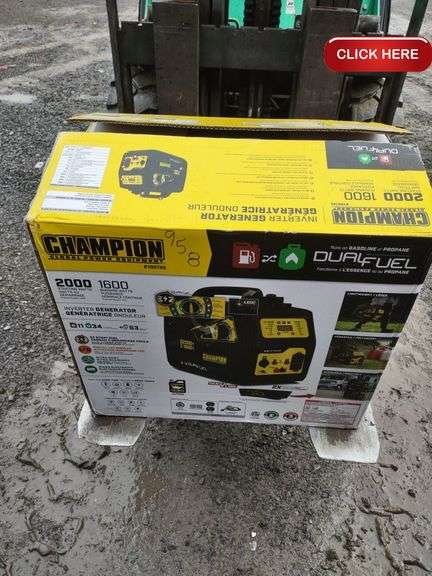
When you're searching for reliable, portable power, a 2000W inverter generator often emerges as the sweet spot. But with so many brands vying for your attention, how do you make the right choice? This comprehensive guide dives deep into a comparative analysis, pitting the popular Champion 2000W against its closest competitors to help you uncover the ultimate powerhouse for your needs. We'll explore what truly sets these machines apart, moving beyond spec sheets to give you the real-world insights you crave.
At a Glance: Your Quick Guide to 2000W Generator Choices
Choosing the right 2000W generator involves balancing power, portability, noise, and cost. Here’s a quick rundown of what we’ll uncover:
- Champion's Edge: Often praised for robust build quality, diverse offerings, and value-packed features like dual fuel and Cold Start technology, making it a budget-friendly yet reliable option.
- Westinghouse's Strength: Known for advanced technology, quieter operation, and clean power, often at a higher initial investment but with premium features and broader high-capacity options.
- WEN's Appeal: A strong contender for affordability and user-friendly designs, particularly good for lighter tasks and quieter environments, though some report varying customer service and plastic component quality.
- Performance vs. Price: You'll typically find a direct correlation between advanced features (like ultra-quiet operation or remote start) and a higher price tag.
- Key Decision Factors: Your choice hinges on specific needs like noise tolerance, required run time, fuel flexibility, and whether you're powering sensitive electronics.
Why a 2000W Generator? The Sweet Spot for Portable Power
Imagine you're camping under the stars, tailgating before the big game, or facing a temporary power outage at home. What do you need? Enough juice to run essentials – maybe a mini-fridge, a fan, charge your devices, or power a few lights. This is precisely where a 2000W generator shines. It strikes a remarkable balance between being powerful enough for everyday necessities and small enough to be genuinely portable.
These generators, especially inverter models, deliver clean, stable power, making them safe for sensitive electronics like laptops and smartphones. They're typically fuel-efficient and much quieter than their conventional counterparts, transforming once noisy outdoor power into a discreet hum. For many, a portable inverter generator in this wattage range is simply the most versatile tool in their arsenal.
The Champion 2000W Inverter Generator: A Closer Look
Champion Power Equipment has carved out a formidable reputation for producing generators that punch above their weight class. Their 2000W inverter models embody this philosophy, offering a compelling blend of features, reliability, and value. When you consider The Champion 2000 Watt Inverter Generator, you're looking at a machine designed for real-world scenarios.
Typically, Champion's 2000W models come with features like their signature Cold Start Technology, ensuring easier startups in chilly weather, and a robust build quality that promises durability. While specific features can vary by model, you generally get stable power for sensitive electronics, reasonable fuel efficiency, and a design focused on user-friendliness. They're often seen as the workhorse of the portable generator world – dependable and ready for action without breaking the bank.
Head-to-Head: Champion 2000W vs. Westinghouse's Contenders
When Champion generators enter the ring, Westinghouse is often in the opposite corner. Both are titans in the generator space, known for reliability and durability. However, they cater to slightly different priorities, especially when we consider models around the 2000W mark.
Power Output & Capacity: More Than Just the Numbers
While we're focusing on the 2000W class, it's worth noting Westinghouse generally offers a broader range of higher-capacity units, going up to 20,000W compared to Champion's 12,000W ceiling. However, within the 2000W category, both brands deliver comparable starting and running watts. The key difference often lies in the refinement of that power. Westinghouse frequently emphasizes their inverter technology, which typically produces power with less than 3% Total Harmonic Distortion (THD), an excellent benchmark for truly clean power ideal for all your delicate gadgets. Champion, while also offering inverter technology with stable power, often focuses on robust power delivery across a wider array of affordable options.
Noise Levels: Quiet Operation Matters
For many, noise is a dealbreaker. No one wants to disrupt a quiet campsite or annoy their neighbors during an outage. This is where Westinghouse often pulls ahead. Their inverter models, like the iGen series, are renowned for exceptionally quiet operation, with some models humming along at a mere 52 dBA. To put that in perspective, it's quieter than a normal conversation. Champion generators, while much quieter than conventional models, generally fall into the 58-74 dBA range. So, if peace and quiet are paramount, Westinghouse tends to offer some of the best quiet generators in this category.
Features & Technology: Beyond the Basic Spark
Both brands pack their generators with useful technology, but their priorities differ.
- Champion: Excels with practical, robust features. Expect things like Cold Start Technology, Intelligauge monitors (voltage, frequency, operating hours), and often dual-fuel flexibility straight out of the box, allowing you to run on either gasoline or propane. Some models even offer wireless remote start, adding a layer of convenience. Carbon Monoxide Auto-Shutoff is also a standard safety feature.
- Westinghouse: Often leans into premium, user-experience-enhancing features. Many models boast USB outlets, clear digital displays (for fuel level, run time, power output), and advanced remote electric start key fobs that work from significant distances. Like Champion, automatic low-oil and CO shutoffs are standard. Their inverter technology is often highlighted for its consistent, clean power delivery.
Durability & Build Quality: Built to Last
Both Champion and Westinghouse build tough generators. They incorporate features like cast iron components in their engines and robust frames designed to withstand the rigors of portable use. Safety shutoffs for low-oil and overloads are standard across both brands, protecting your investment. You can expect years of reliable service from either, provided you follow proper regular maintenance.
Price Point: Value for Your Dollar
This is often a key differentiator. Champion generators are generally more budget-friendly. You can often find a well-equipped Champion 2000W (or slightly higher) dual-fuel model for a significantly lower price point than a comparable Westinghouse inverter. Westinghouse, with its focus on advanced features and often quieter operation, typically carries a higher initial cost. You're paying for those premium refinements and leading-edge technology.
Warranty & Support: Standing Behind Their Product
Both brands offer a strong commitment to customer satisfaction. A 3-year limited warranty is standard for both, backed by nationwide service networks and lifetime technical support. This means you can invest with confidence, knowing you have support if issues arise.
Clash of the Titans: Champion 2000W vs. WEN's Offerings
WEN, a brand with a longer history in power tools, has successfully expanded into the generator market, often emphasizing affordability and user-friendly designs. How does their 2000W lineup stack up against Champion?
Affordability Factor: Price as a Primary Driver
WEN generators are typically the most budget-friendly option among the three. If your primary concern is getting reliable power without stretching your wallet, WEN often presents an attractive entry point. Champion, while more affordable than Westinghouse, usually sits a notch above WEN in terms of price. This cost difference can be a deciding factor for those with tighter budgets or who only need occasional use.
Portability & Design: Grab and Go Power
Both Champion and WEN understand the importance of portability for a 2000W generator. WEN often excels with very compact, lightweight designs featuring ergonomic handles, making them incredibly easy to move. Champion also prioritizes portability, though some of its models might be slightly heavier due to their robust construction or additional features like integrated wheels (on larger models). For pure grab-and-go convenience, WEN often gets the nod for its streamlined designs.
Fuel Efficiency: Getting the Most Out of Every Drop
When comparing specific models, Champion generators often demonstrate better fuel efficiency. For example, a Champion might offer a longer runtime on a smaller fuel tank compared to a WEN model with similar wattage. This means fewer refueling stops and potentially lower operating costs over time. While WEN generators are generally fuel-efficient, Champion frequently optimizes its engines for extended operation.
Reliability & User Experience: What Users Are Saying
Champion generators consistently receive high praise for their superior durability and robust performance. Users often highlight the sturdy construction and the consistent power output even under demanding conditions. WEN generators are also considered reliable for their price point and are praised for intuitive controls and easy setup. However, some user feedback points to occasional concerns regarding the quality of plastic components or inconsistent customer service experiences with WEN, a contrast to Champion's generally strong reputation for build quality and customer support.
Quieter Operation: A Nuanced Comparison
User feedback indicates that WEN generators are often noted for quiet operation, particularly their inverter models. This can make them a strong contender for environments where noise is a concern. While Champion has made significant strides in reducing noise with its inverter technology, some users occasionally raise concerns about noise levels on specific Champion models compared to their quietest WEN or Westinghouse counterparts. Ultimately, checking the specific dBA rating for each model is crucial, as quietness can vary even within a brand's lineup.
Beyond the Big Two: Other Competitors to Consider
While Champion, Westinghouse, and WEN are dominant players in the 2000W portable generator market, they're not alone. Brands like Harbor Freight's Predator line also offer compelling options, particularly for budget-conscious buyers. Companies like Ryobi, Honda, and Generac also have strong contenders, each with unique selling propositions. Honda, for instance, is often lauded for its legendary reliability and ultra-quiet operation, though typically at a premium price. Ryobi often focuses on integration with its battery tool ecosystem, and Generac offers a broad range from small portables to whole-home standby units. Understanding how different brands approach performance and price can further refine your decision, especially when comparing options like Champion vs Predator generators for sheer value.
Making Your Choice: A Decision Framework
Navigating the options can feel overwhelming, but a systematic approach makes it much clearer. Here’s a framework to guide your decision:
Identify Your Needs: What Are You Powering?
Before you even look at a spec sheet, list the appliances you intend to run. Be specific: a small RV fridge (usually 500-1000W surge, 100-200W running), a few LED lights (10-20W each), phone chargers (10-20W), a laptop (50-100W), or perhaps a small coffee maker (800-1200W). This helps you determine if a 2000W generator is sufficient, or if you might need slightly more or less power. Remember, the listed wattage is typically the running watts, with a higher starting (or surge) wattage for motors.
Budget Realities: What Can You Afford?
Generators in the 2000W class can range significantly in price. WEN often leads on the low end, Champion provides excellent value in the mid-range, and Westinghouse often sits at the higher end for its premium features and quiet operation. Determine your absolute maximum budget and then look for the best combination of features and reliability within that limit. Sometimes, spending a little more upfront can save you headaches and costs down the road.
Noise Sensitivity: How Quiet Do You Need It?
Are you using this generator at a quiet campground, in your backyard near neighbors, or for an emergency where noise is less of a concern? If quiet operation is critical, pay close attention to the dBA ratings. Models below 60 dBA are generally considered quiet, and those closer to 50 dBA are exceptionally so. Westinghouse often excels here, while Champion and WEN also offer very quiet inverter models.
Fuel Type Preference: Gasoline, Propane, or Both?
The rise of dual-fuel generators has been a game-changer. Champion is particularly known for its extensive dual-fuel lineup.
- Gasoline: Widely available, but has a shorter shelf life and can be messy.
- Propane: Cleaner-burning, longer shelf life, often safer to store, but usually results in slightly lower power output and a dedicated tank.
If you appreciate the flexibility and extended fuel storage options of dual-fuel flexibility, prioritize models that offer it.
Portability Requirements: How Often Will You Move It?
All 2000W generators are designed to be portable, but some are lighter and more compact than others. If you plan to carry it frequently, look at the dry weight and physical dimensions. WEN often scores high on compactness and light weight. For heavier units, consider whether it has integrated wheels or robust carrying handles.
Warranty & Support: Peace of Mind
A generator is an investment. A solid warranty (like the typical 3-year limited warranty offered by Champion and Westinghouse) and reliable customer support are crucial. Research customer service reviews for any brand you're considering to ensure you'll have assistance if problems arise.
Essential Tips for Maximizing Your Generator's Lifespan
Regardless of which 2000W generator you choose, its longevity and performance depend heavily on how you care for it. Treat your generator right, and it will serve you faithfully for years.
- Read the Manual: This sounds obvious, but it's the single most important step. Every generator has specific requirements.
- Use Fresh, Stabilized Fuel: Stale gasoline can gum up carburetors. Use fresh fuel, and if storing for more than a month, add a fuel stabilizer. For dual-fuel models, propane generally has fewer storage issues.
- Change Oil Regularly: Follow the manufacturer's recommendations for oil changes, especially after the initial break-in period. This is vital for engine health.
- Clean or Replace Air Filter: A dirty air filter chokes your engine. Inspect and clean it regularly, especially if operating in dusty conditions.
- Store Properly: When not in use, store your generator in a dry, protected area. If storing long-term, ensure the fuel system is prepared (run dry or stabilized fuel) and the battery is maintained if it has an electric start.
- Regular Maintenance Schedule: Adhere to a regular maintenance schedule for things like spark plug checks, valve adjustments, and general inspection.
- Test Periodically: Even if you don't use it often, start your generator every few months and let it run for 15-20 minutes under a light load. This keeps the engine lubricated and ensures it's ready when you truly need it.
Common Questions About 2000W Generators, Answered
You've got questions, and we've got crisp, standalone answers to help clarify common concerns about 2000W generators.
Are 2000W generators truly quiet?
Many modern 2000W generators, especially inverter models, are indeed remarkably quiet. You should look for dBA ratings, with anything below 60 dBA considered quiet, often comparable to a normal conversation. Premium models from brands like Westinghouse can get as low as 52 dBA.
Can a 2000W generator run sensitive electronics?
Yes, absolutely. Most 2000W portable generators today are inverter models. Inverter technology produces "clean" sine wave power with low Total Harmonic Distortion (THD), typically less than 3-5%. This makes them perfectly safe for powering sensitive electronics like laptops, smartphones, and smart TVs without risk of damage.
What kind of fuel is best for a 2000W generator?
The "best" fuel depends on your priorities. Gasoline is widely available but has a limited shelf life. Propane (LPG) offers cleaner burning, longer storage life, and can be safer to store, though it typically results in a slight reduction in power output. Many users prefer dual-fuel generators for the flexibility to switch between gasoline and propane, offering the best of both worlds.
How often should I perform maintenance on my generator?
Always refer to your generator's specific owner's manual for precise maintenance intervals. However, general guidelines include:
- First Oil Change: After the initial 5-10 hours of use (break-in period).
- Subsequent Oil Changes: Every 50-100 hours of operation, or at least once a year, whichever comes first.
- Air Filter: Inspect and clean every 50 hours, replace as needed.
- Spark Plug: Inspect annually or every 100-300 hours, replace as needed.
- Fuel System: Inspect annually, especially before long-term storage.
The Final Spark: Powering Your Adventures with Confidence
Choosing the right 2000W generator isn't about picking a "winner" in an arbitrary competition; it's about finding the perfect partner for your unique power needs. Whether you lean towards Champion's robust value, Westinghouse's premium quietness, or WEN's accessible affordability, each brand brings something valuable to the table.
By carefully considering your budget, noise tolerance, fuel preferences, and specific power requirements, you can confidently select a generator that will illuminate your campsite, keep your essential appliances running during an outage, or simply make your outdoor adventures more comfortable. Invest wisely, maintain diligently, and you'll enjoy reliable portable power for years to come.